
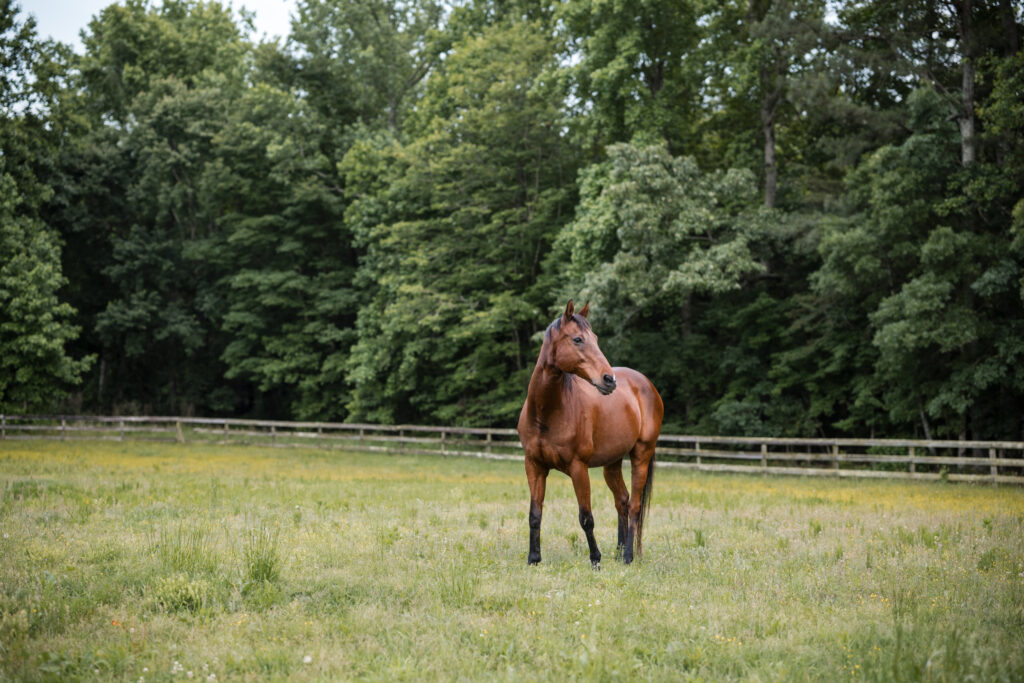
If you’re dreaming about your own horse property, I’m willing to bet you’ve pictured this moment: coffee in hand, standing on the back porch, looking out at your horses grazing peacefully on a big, green pasture. Here’s the honest, Realtor-to-horse-person truth: that grass matters, a lot. And not all grass is created equal, especially here in the Triangle area of North Carolina.
So, how important is the grass when buying a horse farm? Short answer: Very.
A good pasture can feed your horse (a bad one can’t)
Here’s something a lot of buyers don’t realize until later: A single acre of healthy, well-established pasture can support a horse for a large part of the year. But—and this is a big but—if that pasture is overgrazed, poorly seeded, full of weeds, or growing on weak soil, you’re going to rely a lot more on hay, supplements, and extra land.
Pretty doesn’t always mean practical
I’ve shown properties that look like a postcard with wide open fields, bright green grass, and sunshine hitting just right. And then we step onto the land, and I’m thinking: “OK, but what happens here in February?”
In the Triangle (Wake, Chatham, Johnston, and Durham Counties), we’re dealing with a mix of clay-heavy soils, drainage issues, and seasonal weather swings. That means a pasture that looks lush in spring can turn into a mud situation or struggle to regrow if the underlying conditions aren’t right.
So when I evaluate land, I’m not just asking:
- Is it green?
- Is it pretty?
I’m asking:
- What’s the soil like underneath?
- How does it handle rain?
- Has this pasture been managed well over time?
Because grass health starts with soil health. Always.
You may also be interested in: 5 things to look for in the land when buying a horse property
Soil first, grass second
Here in Central North Carolina, you’ll often see these types of soil:
- Clay (common in Wake County and the surrounding areas)
- Sandy patches (especially in some Johnston/Harnett areas)
- Mixed soils depending on previous land use
Clay gets a bad reputation, but with proper management and drainage, it can hold up really well under horses. The bigger issue is compaction and water movement: If water sits, grass struggles; and if grass struggles, horses overgraze. Then suddenly that “perfect pasture” needs a full rehab.
What grasses actually work in the Triangle?
In this part of North Carolina, we’re primarily working with cool-season grasses, which thrive in spring and fall and slow down in the heat of summer.
Some of the best options for horse pastures here include:
- Endophyte-free tall fescue (safe and durable)
- Orchard grass (great for grazing and hay)
- Perennial ryegrass (fast to establish, good for filling in gaps)
If I’m walking a property and I see a mix of these, that’s a good sign. If I see patchy weeds, bare spots, or mystery plants, we’re having a different conversation.
Let’s talk about weeds (because your horse will)
Toxic plants like buttercup, ragwort, and certain types of nightshade can show up in neglected fields. Horses don’t usually go looking for trouble, but if the pasture is sparse, they’ll start sampling.
So I always check:
- Has the pasture been maintained?
- Are weeds under control?
- Has this land been rested and rotated?
Fixing a weedy pasture is possible, but it takes time, effort, and money.
Do you want your land working for you or against you?
Good grass means:
- Lower feed costs
- Healthier horses
- Less mud, less stress, less maintenance
Bad grass means:
- More hay
- More repairs
- More frustration over time
And I want your property to feel like a dream, not a constant project. My honest advice (from someone who’s walked a lot of pastures) is: don’t fall in love with a property until you understand the grass. Or better yet, bring someone with you who does.
I look at land a little differently. I’m thinking about:
- Soil composition
- Drainage patterns
- Pasture potential
- And how horses will actually live on that land day-to-day
Purchasing land in NC? Here’s what you should do before you buy.
I’m here to help you build a life where your horses are healthy, safe, and happy
If you’re starting to look at horse properties in the Triangle area, I’d love to be a resource for you. We can walk properties together, talk through what’s working (and what’s not), and figure out what’s realistic for your goals. Because if your dream is waking up to horses grazing outside your window, I want to help you and make sure the grass is actually worth grazing.